THEMES
CUSP Research Programme
The principal objective of CUSP is to explore the question: what can prosperity possibly mean in a world of environmental, social and economic limits? Our guiding vision of prosperity is one in which people everywhere have the capability to flourish as human beings—within the ecological and resource constraints of a finite planet. CUSP’s research explores not just the economic aspects of this challenge, but also its social, political and philosophical dimensions. Ultimately, prosperity must offer society a credible and inclusive vision of social progress. The over-arching goal of CUSP is to contribute to that task.
Our interdisciplinary research programme is organised around five core themes: 1) Meanings and Moral Framings of the Good Life, 2) The Role of the Arts & Culture in Delivering Prosperity, 3) Political and Organisational Dimensions of Sustainable Prosperity, 4) Social and Psychological Understandings of the Good Life, and 5) System Dynamics Modelling.
The findings of these themes are drawn together through a rich portfolio of engagement across business, government and civil society. This portfolio includes a unique cross-theme case study to develop An Economy That Works. The second is a collaboration on sustainable finance with a coalition of thought leaders including the Aldersgate Group.
We are exploring links between energy, wellbeing and the UK’s productivity puzzle; and have received funding to model transition risk—combining elements from economics, finance and physics. CUSP also provides the secretariat for the All-Party Parliamentary Group on Limits to Growth, a platform for cross-party dialogue on economic prosperity in a world of environmental and social limits.
We have initiated an extended public dialogue aimed at bringing together people from all walks of life and all sectors of society to develop new visions for a lasting and sustainable prosperity. Chaired by the former Archbishop of Canterbury, Dr Rowan Williams, The Nature of Prosperity Dialogue offers a stimulating environment for discussion and a creative forum for change.
Themes

Meanings and Moral Framings of the Good Life
The foundation for our work is an understanding of the meanings of prosperity. The Political Economy strand explores the moral and philosophical assumptions that underpin visions of sustainable prosperity. Crucially, we seek to identify the key institutions and political questions that must be addressed if sustainable prosperity is to be achieved in practice—not merely valued as an ideal.

The Role of the Arts & Culture in Delivering Prosperity
CUSP views arts and culture not merely as tools for communicating sustainability, but as inherent to prosperity itself. They enable participation in society and contribute to a creative, fulfilling quality of life. Our Arts theme develops this conceptual framework, exploring the interactions between cultural prosperity, place, employment (quality and availability), leisure, and the rights to self‑expression.

Political and Organisational Dimensions of Sustainable Prosperity
This strand explores grassroots transitions to sustainability, alternative enterprise forms, investment models for sustainable prosperity, and political institutions linked to the ‘ecological state’. At the macro level, we examine grand narratives of political legitimacy and the challenge of governance under resource constraints. At the micro level, we investigate grassroots initiatives to see how alternative ownership and incentive structures can deliver a more sustainable prosperity.

Social and Psychological Understandings of the Good Life
At the heart of prosperity lie ordinary people’s desires, aspirations, and capabilities. This research strand examines how visions of the good life are contested and shaped by context, how fairness and justice enter those visions, and whether less materially intensive lifestyles can still deliver wellbeing – using both social research and psychological experiments.
Systems Analysis to Explore Narratives of Sustainable Prosperity
Achieving sustainable prosperity requires compelling social narratives and robust economic models to deliver them. The system dynamics strand develops qualitative narratives of sustainable prosperity and explores their quantitative implications through macroeconomic modelling. Our research examines the economic, social, and environmental implications of these models and narratives, as well as the role of good work in delivering sustainable prosperity.

Building An Economy That Works
At CUSP we are rethinking economics. To make the economy work for everyone, politics need to ensure economic and social stability even as relentless growth in consumer demand is attenuated. We are addressing the ‘post-growth challenge’ throughout our work programme, engaging with a variety of stakeholders in business and parliament, to help developing strategies for an economy that works for everyone.
Investing in the Future
We are looking at sustainable finance from various angles—our research aims to develop a powerful new framing of investment in terms of a meaningful ‘commitment to the future’. This framing is motivated by the investment needs inherent in the transition to a sustainable, low-carbon economy. Resource productivity, low-carbon infrastructure and the protection of habitats and ecosystems all demand a new portfolio of investment with new governance and facilitating conditions.
Nature of Prosperity Dialogue
Ultimately, prosperity must offer society a credible and inclusive vision of social progress. The over-arching goal of CUSP is to contribute to that essential task. We have initiated an extended public dialogue aimed at bringing together people from all walks of life and all sectors of society to develop new visions for a lasting and sustainable prosperity. Chaired by the former Archbishop of Canterbury, Dr Rowan Williams, The Nature of Prosperity offers a stimulating environment for discussion and a creative forum for change.
Ongoing Projects

CYCLES | Children and Youth in Cities—Lifestyle Evaluations and Sustainability
What conditions enable young people to live sustainable, fulfilling lives in cities? How do young citizens see their future? What best practices for city planning and community action can make the biggest sustainable difference? How can we help cities track progress and help young citizens flourish within the limits of a finite planet? These questions are addressed in CYCLES.
MAPS | Models, Assessment and Policies for Sustainability
CUSP researchers at the University of Surrey are part of an international consortium of esteemed research institutions and practice partners to contribute their research and modelling expertise to the MAPS project: Models, Assessment and Policies for Sustainability. The project’s core mission is to map transformative policy pathways to reconcile desirable social outcomes with sustainability requirements.

WISE Horizons | Wellbeing, Inclusion, Sustainability and the Economy
As part of the Horizon Europe’s Transformation programme, CUSP researchers are collaborating with researchers from a range of global institutions to investigate key drivers and policy levers for a transition to a postgrowth economy.
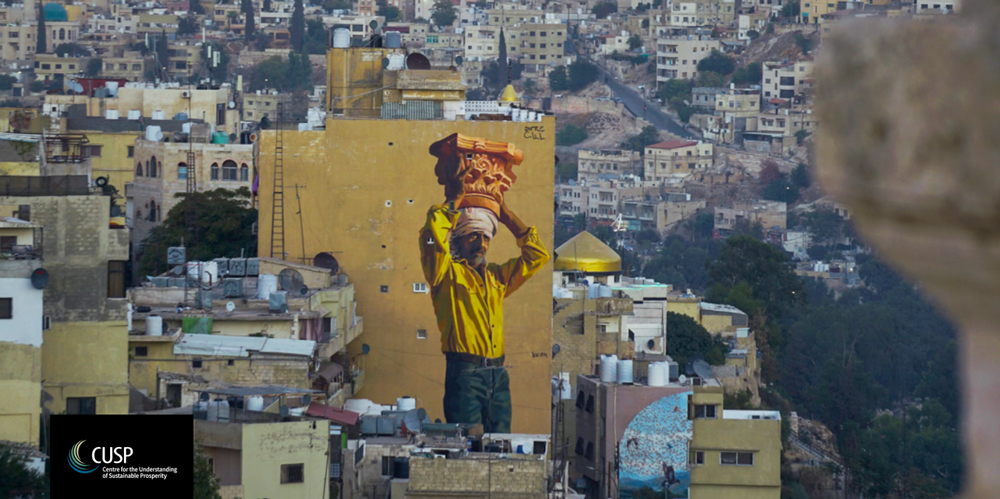
Shifting the Rhetoric | Jordan
This partnership between the Centre for the Understanding of Sustainable Prosperity (UK) and the King Hussein Foundation (Jordan), generously supported by the Asfari Foundation, aims to share insights and strategies for sustainable prosperity between the two countries and across the wider Middle East. The Shifting The Rhetoric programme was announced at COP28 in Dubai and formally launched in Amman in October 2024.
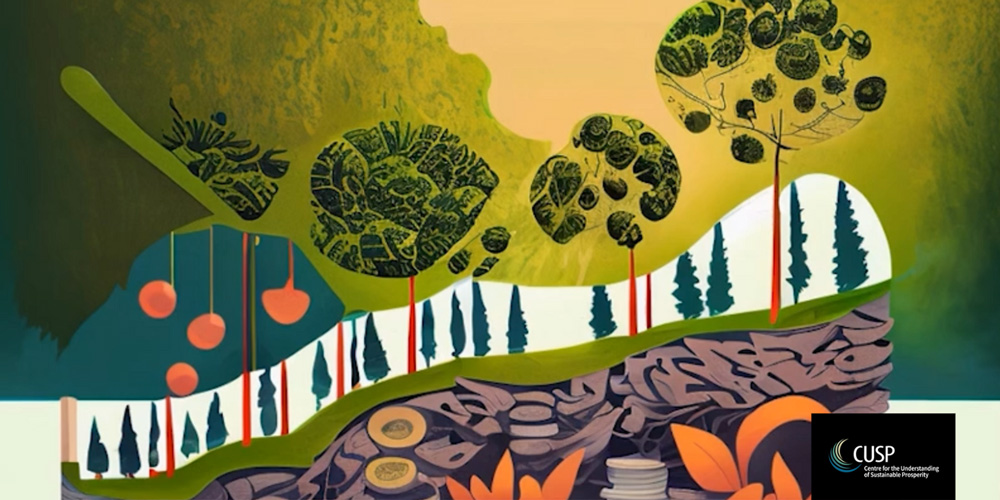
SME FinBio | Nature positive small and medium-sized enterprise finance
Funded by UKRI and the Natural Environment Research Council (NERC), the broad aim of this project is to explore SME finance markets in four high-risk environmental impact sectors: agrifood, infrastructure, sustainable fashion and advanced manufacturing technology. The project builds on previous research, which identified constraints and opportunities for SMEs and their financiers to account for climate and biodiversity in a cohesive and meaningful way; laying the ground for more sector specific work now.

Green Farm Africa: Transforming African Agriculture
Green Farm Africa offers an innovative model for African agriculture, integrating advanced technologies with indigenous knowledge, aligning sustainable practices with economic feasibility, and strengthening local communities through improved access to global markets.
Past Projects
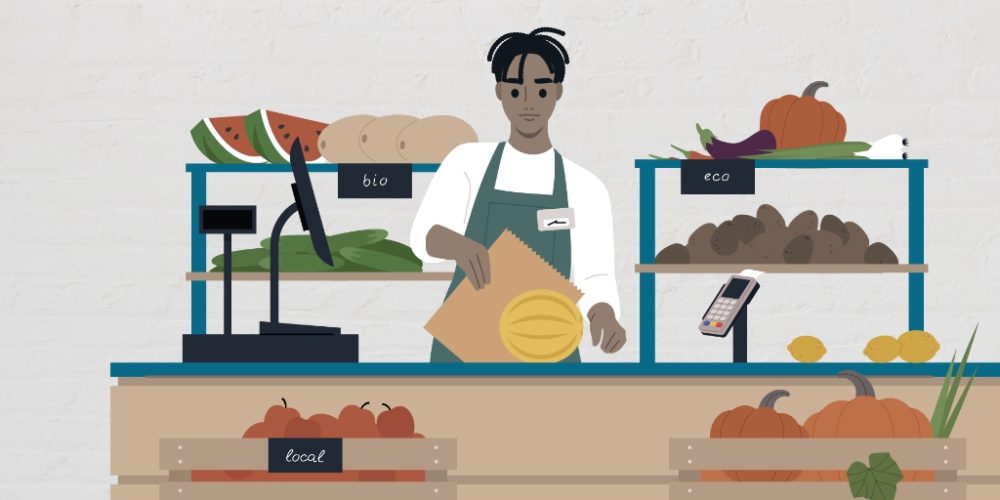
Social enterprise as a catalyst for sustainable and healthy local food systems
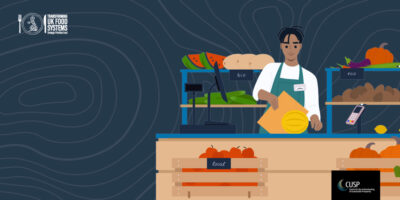
As part of the UKRI Transforming UK Food Systems programme, this project will investigate social enterprises providing community growing spaces and distribution schemes, leisure and fitness centres, children’s nurseries and other community-based services. The project will focus on their unique contribution to food systems that are more inclusive, sustainable and healthy.

TRansit | Modelling transition risk
Funded by the ESRC’s Rebuilding Macroeconomics network, the broad aim of this project is to develop an agent-based, stock-flow consistent macro-economic model capable of addressing the risks (and opportunities) associated with the transition to a net-zero carbon economy. The project combines elements from economics, finance and physics, as well as a number of sub-disciplines within each of these areas.

Powering Productivity | Energy, wellbeing and the UK’s productivity puzzle
Productivity growth—more output from fewer inputs—is a key goal of conventional policy, yet it remains poorly understood. This ESRC‑funded project explores links between productivity and two major gaps: energy, and wellbeing. The aim is to map existing evidence and guide future ESRC productivity research.

RESOLVE | Lifestyle Values and Environment
The overarching aim of this CUSP forerunner project was to explore the complex relationship between people’s lifestyles, societal values and the environment. In operation from 2006 to 2011, RESOLVE pioneered international research on sustainable lifestyles and provided robust social science evidence base for policymakers seeking to understand and to influence the behaviours and practices of ‘energy consumers’ in the light of climate change.
SLRG | Sustainable Lifestyles Research Group
The principal aim of this CUSP forerunner project was to develop new and relevant understandings of the processes which lead to changes in people’s lifestyles, behaviours and practices; and to offer evidence-based advice to policy-makers about realistic strategies to encourage more sustainable lifestyles.
PASSAGE | Prosperity and Sustainability in the Green Economy
The Prosperity and Sustainability in the Green Economy (PASSAGE) fellowship, led by Prof Tim Jackson and funded by the ESRC, explored the relationship between prosperity and sustainability within the green economy. The project synthesised research on sustainable living, developed work on ecological macroeconomics, worked to transform finance for sustainable investment, and engaged with stakeholders across government, business, and academia while building capacity in new economic thinking for postgraduates and young researchers.
Latest Posts